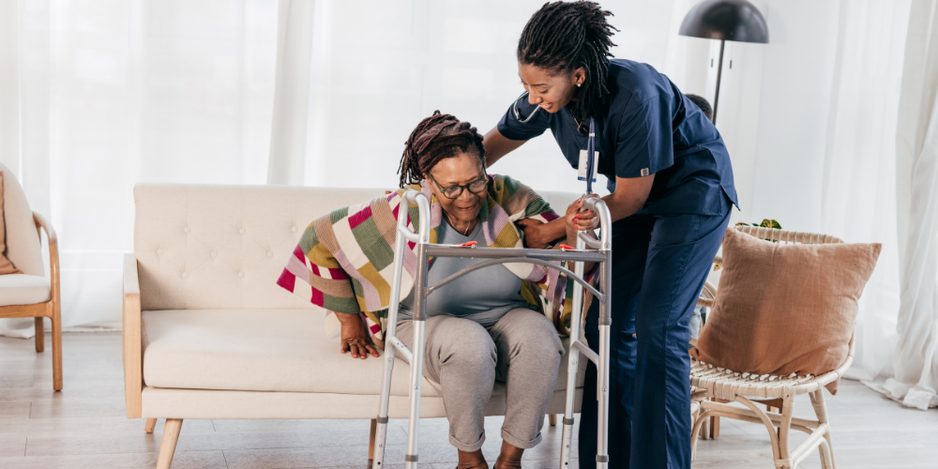
The fall doesn't usually come out of nowhere. It happens in familiar spaces. The short walk to the bathroom. The step that's been taken a thousand times. The moment when balance shifts just slightly—and there's nothing close enough to hold onto.
What makes falls difficult isn't just the injury. It's how quickly independence can change afterward.
Reducing fall risk at home isn't about restricting movement. It's about making everyday movement safer, steadier, and more predictable.
What Causes Falls at Home for Older Adults?
Falls at home are usually caused by a combination of physical changes and environmental factors. It's rarely just one issue.
Balance may not be as stable as it once was. Muscle strength can decline gradually. Medications may cause dizziness or fatigue. At the same time, the home environment often remains unchanged—furniture placement, lighting, flooring—all designed for a level of mobility that may no longer be the same.
It's this mismatch that creates risk.
A small change in physical ability, combined with an unchanged environment, is often where falls begin.
What Are the Early Warning Signs of Fall Risk?
Early signs of fall risk often show up as hesitation, instability, or changes in movement patterns. These signs usually appear before any actual fall occurs.
You might notice slower transitions—standing up, sitting down, turning. There may be moments of reaching for support where none was needed before. Near-falls are common but often dismissed because they didn't result in injury.
Changes in confidence are just as important. When someone becomes more cautious or avoids certain movements altogether, it often reflects an awareness that balance is no longer reliable.
These signals matter. They are often the clearest opportunity to prevent a more serious incident.
How Can You Reduce Fall Risk at Home?
Reducing fall risk starts with making the environment and daily routines support safe movement. The goal is not to limit activity, but to remove unnecessary hazards and improve stability.
Focus first on the areas where movement happens most frequently.
Clear pathways so there's nothing to step over or around. Ensure lighting is consistent, especially in hallways and bathrooms where visibility matters most. Rugs, cords, and uneven surfaces should be addressed. Not because they always cause falls, but because they increase the chance when balance is already compromised.
Support should also be placed where it's naturally needed. Bathrooms, for example, are one of the most common locations for falls—not because they're inherently unsafe, but because they combine movement, moisture, and limited space.
Beyond the environment, routines matter. Moving too quickly, especially when getting up from bed or a chair, can increase instability. Encouraging slower, more deliberate movement often reduces risk more effectively than trying to "be careful" in a general sense.
A Quick Safety Check for the Home
A simple way to assess fall risk is to walk through the home with attention to movement:
- ✓Can someone move from room to room without needing to navigate obstacles?
- ✓Is there adequate lighting at all times of day, including nighttime?
- ✓Are commonly used items within easy reach?
- ✓Are high-risk areas like bathrooms and stairs supported appropriately?
If any of these require extra effort or adjustment, they're worth addressing early.
When Does Fall Risk Become a Serious Concern?
Fall risk becomes more serious when instability begins to affect daily routines or when near-falls become more frequent. At this stage, the likelihood of an actual fall increases significantly.
A previous fall is also an important indicator. Once a fall has occurred, the risk of another tends to rise—not only because of physical factors, but because confidence in movement is often reduced.
In these situations, prevention becomes more structured. It's no longer just about removing hazards, but about actively supporting safe movement throughout the day.
How In-Home Care Helps Reduce Fall Risk
Consistent support is one of the most effective ways to reduce fall risk.
Having someone present during movement, especially during transfers, walking, or bathroom use, adds a layer of safety that the environment alone cannot provide. It also allows early changes in mobility to be noticed and addressed before they lead to injury.
For families in Maryland, in-home care often becomes part of fall prevention when safety can no longer rely on the environment alone.
Support with mobility, transfers, and daily routines helps maintain independence while reducing the likelihood of injury. It also removes the pressure on family members to monitor every movement themselves.
What Happens After a Fall Matters Too
Even with precautions, falls can still happen.
What matters then is how quickly support is provided and how recovery is managed. A fall can lead to reduced mobility, increased caution, and changes in daily routine that affect overall quality of life.
Addressing those changes early—physically and practically—helps prevent a cycle where reduced movement leads to further decline.
Closing Thought
Fall prevention isn't about eliminating movement. It's about making movement safer in the environment where it happens every day.
The earlier small risks are addressed, the easier it is to maintain confidence, stability, and independence over time.
Ready to Talk?
Speak with a care coordinator today.